LED vs Mechanical vs Electromechanical Semaphores
Position indicators, or semaphores, are vital components in electrical panels, substations, and power plants for visually displaying the status of circuit breakers, disconnectors, and other equipment. Over time, these devices have evolved through three main generations: mechanical, electromechanical, and LED. Understanding the differences between these technologies helps engineers in the proper selection, operation, and maintenance of control and monitoring systems.
### Structure and Operating Principles
Each generation of semaphore operates on a different technology, which directly impacts its performance, reliability, and lifespan.
- **Mechanical Semaphore:** This type has the simplest structure. Its operation is purely physical, where an indicator (usually a two-colored flag or disk) is connected via a linkage to the operating mechanism of the main equipment (like a breaker). As the equipment changes state, the linkage causes the indicator to physically rotate, showing the new status. These semaphores require no electrical power to operate.
- **Electromechanical Semaphore:** This generation combines an electrical command with mechanical action. An electrical signal (usually from an auxiliary contact) is applied to a solenoid or a small motor. The electrical energy creates a magnetic field, moving a core or lever, which in turn flips a colored flag. These models are mainly divided into two types: **Monostable**, which requires continuous power to maintain its position, and **Bistable**, which changes state with a short pulse and remains in that state.
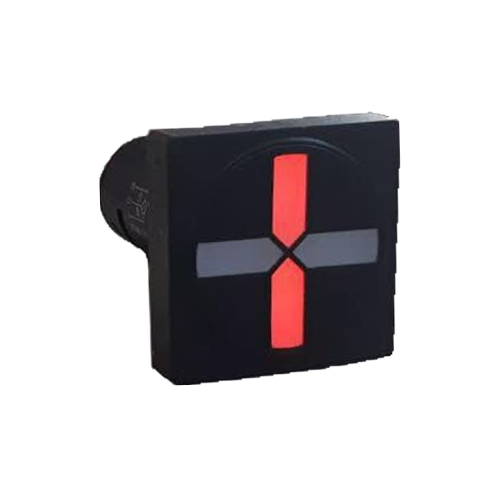
- **LED Semaphore:** The most modern generation of position indicators is entirely electronic and based on solid-state technology. There are no moving parts in these semaphores. Electrical signals from auxiliary contacts directly activate electronic circuits, which light up Light Emitting Diodes (LEDs) of different colors (usually red and green). The status is displayed instantly without any physical movement.
### Operating Speed
- **Mechanical:** Its speed depends on the operating speed of the main equipment and is considered almost instantaneous.
- **Electromechanical:** Due to the need for the coil to energize and for mechanical movement, there is a slight delay (in the range of tens to hundreds of milliseconds) in displaying the status.
- **LED:** The operating speed is instantaneous. The corresponding LED lights up as soon as the electrical signal is received. This high speed is crucial for modern monitoring systems.
### Lifespan and Reliability
- **Mechanical:** Its lifespan depends on the wear and tear of moving parts, connections, and levers. It is vulnerable to vibration and impact.
- **Electromechanical:** Due to having both moving parts and an electric coil, it is prone to mechanical failures (sticking) and electrical failures (coil burnout). Its lifespan is generally shorter than the other two types.
- **LED:** Having no moving parts, it has a very long lifespan (typically over 50,000 hours) and is highly resistant to vibration and mechanical shocks. This feature significantly increases system reliability.
### Power Consumption
- **Mechanical:** It has zero electrical power consumption.
- **Electromechanical:** Depending on the type (monostable or bistable), it has varying power consumption, but it is always higher than LED models.
- **LED:** It has extremely low power consumption (usually in the range of a few milliamperes). This advantage, in panels with a large number of indicators, reduces the load on the DC power supply and minimizes heat generation.
### Maintenance
- **Mechanical:** Requires periodic inspections, adjustments, and lubrication of linkages.
- **Electromechanical:** May require coil replacement or repair of the moving mechanism.
- **LED:** It is virtually maintenance-free. In case of failure, the entire unit is simply replaced.
### Readability and Visibility
- **Mechanical and Electromechanical:** The readability of colored flags is highly dependent on ambient light. In dark environments or from poor viewing angles, it is difficult to determine the status. The color of the flags may also fade over time.
- **LED:** By actively producing light, it clearly displays the status in all lighting conditions (from complete darkness to bright light) and from wide viewing angles.
### Comparison Table of Mechanical, Electromechanical, and LED Semaphores
| Feature | Mechanical Semaphore | Electromechanical Semaphore | LED Semaphore |
|---|---|---|---|
| Structure | Moving parts, physical linkage | Solenoid, moving parts | Solid-State, no moving parts |
| Operating Speed | Instantaneous (depends on main gear) | Slight delay | Instantaneous |
| Lifespan | Medium (mechanical wear) | Low (mechanical & electrical wear) | Very High (tens of thousands of hours) |
| Power Consumption | Zero | Low to Medium | Very Low (a few mA) |
| Maintenance | Periodic adjustments required | Prone to coil/mechanism failure | Virtually maintenance-free |
| Readability | Poor to Medium | Poor to Medium | Excellent in all conditions |
| Reliability | Medium | Low | Very High |
### Suitable Application for Each Type
- **Mechanical Semaphore:** Its use today is very limited, mainly found in very old equipment or special applications where providing an electrical supply is not feasible.
- **Electromechanical Semaphore:** It was common in older systems but is being replaced by LED semaphores in new designs due to its low reliability and maintenance needs.
- **LED Semaphore:** It is the gold standard for all new applications in high-voltage substations, power plants, industries, and control panels. High reliability, long life, low consumption, and no maintenance make it the first choice for engineers.
Focusing on modern technologies, Rizmooj Electric Toos manufactures a variety of LED position indicators, such as the EPS-501LE (square) and EPC-501LE (round) models. With very low current consumption (less than 3 mA) and a working voltage of 110 VDC, these semaphores are optimized for use in substation and power plant panels and are an ideal replacement for older generations.
To see the full range of these products, you can visit the LED Semaphores and Position Indicators page.
Frequently Asked Questions
### Why have LED semaphores replaced older models?
Due to numerous advantages including very high reliability, long lifespan (over 50,000 hours), negligible power consumption, resistance to vibration and shock, no maintenance requirements, and excellent readability in various lighting conditions, LED semaphores have become the industry standard.
### Are LED semaphores resistant to vibration?
Yes. Due to their solid-state structure and the absence of any moving parts, LED semaphores are highly resistant to the vibration and mechanical shocks common in industrial environments and electrical substations.
### What is the main difference between an electromechanical and an LED semaphore?
The fundamental difference is in the operating mechanism. An electromechanical semaphore uses an electrical command to move a physical part (a flag), whereas an LED semaphore directly converts that same command into light. This elimination of moving parts is the primary source of the LED semaphore's superiority.
Related Articles
- What is an LED Semaphore? A Complete Guide to Semaphore Indicators in Electrical Panels
- Semaphore vs. Signal Lamp: What's the Difference?
- How to Wire an LED Semaphore